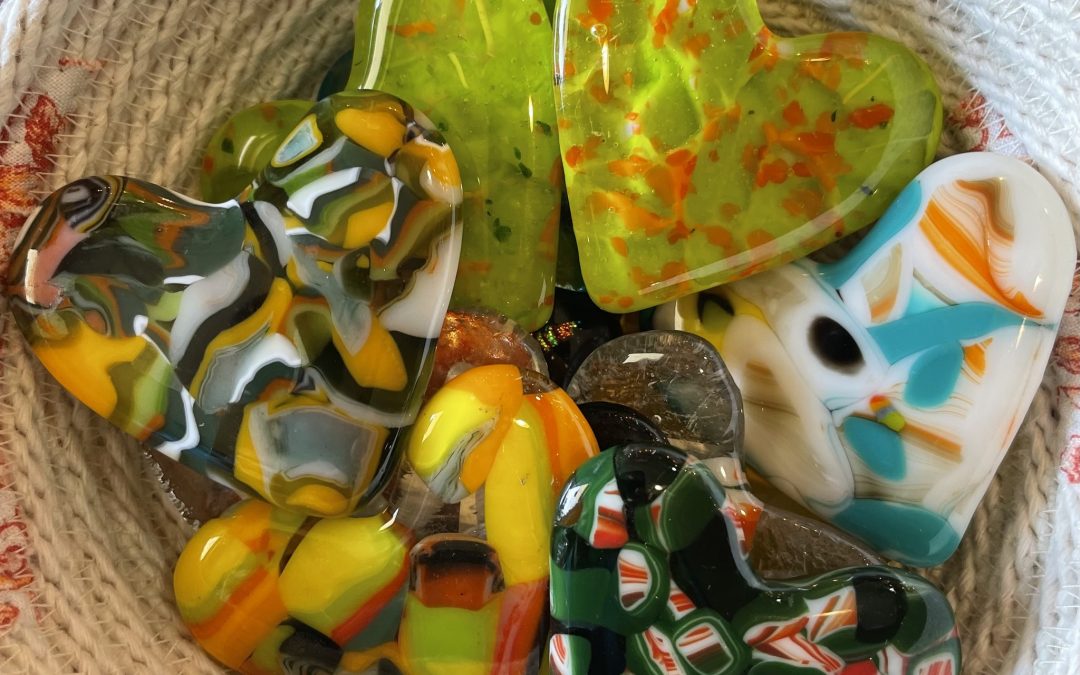
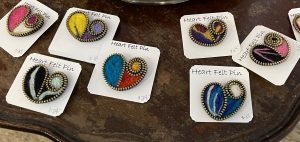
Area artists put their heart into their craft. Support local art.
…
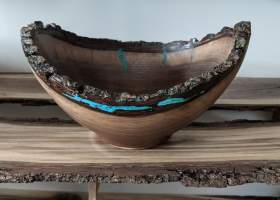
We display and sell the products of over 60 area artisans who take pride in the quality and originality of their handmade art & craft!
…
…
About
Northwoods Pioneer Gallery & Gifts, formerly Pioneer Crafts Co-op, was founded in 1971 and first opened for business on Memorial Day 1972. It was started by several small local craft organizations with assistance from the Arrowhead Economic Opportunity Agency (AEOA).
The original purpose of the association was to provide a way to market the craft products of Northeastern Minnesotans, particularly low-income and elderly persons, and to carry on educational activities in the art and craft field. The membership requirements have since been revised to include all local artisans, regardless of age or income, who want an outlet for their quality art and craft products.
We moved to our current location in the Spring of 1999 after the construction of the Silver Creek Cliff tunnel was completed on Highway 61. Our new location is about 7 miles further up the shore from the tunnel. (11 miles from Two Harbors).
As a cooperative, all members contribute in some way to the operation of the shop. The primary responsibility is to tend the shop as sales clerks. Our members may be offering demonstrations while they tend the shop in such varied techniques as wood working, painting, beading, jewelry making or wheat weaving. Such crafts reflect the heritage of the pioneers of Northeastern Minnesota. Sharing the love of their art and craft is a wonderful experience for the members!
The creative brand’s new storefront features merch for sale created by local artists, screen-printing services, plus photo and music studios.
…
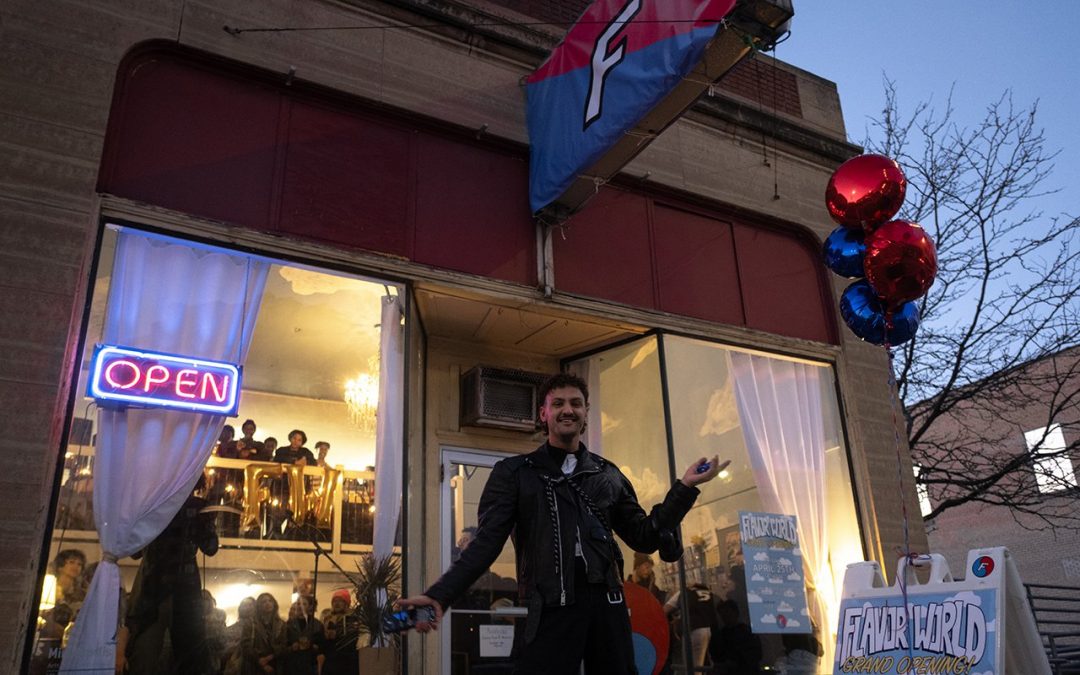
Downtown Minneapolis just got more flavorful. At the end of April, the creative brand Flavor World hosted its grand opening at their new headquarters located in the Harmon Place historic district, near Loring Park. The new storefront serves as a community art space for local creatives to connect.
Drew Kinkade founded Flavor World, which began as a clothing brand, while attending college in 2018. Eventually, the brand became too hard to juggle with his studies, so he decided to pursue Flavor World full time. Throughout the years, Kinkade and his team have expanded the brand, which now offers screen-printing services, publishes a magazine, and hosts events, among many other things, to build community in the Twin Cities.
“I feel like the Minneapolis and St. Paul art scenes, they’re kind of like a web,” Kinkade says. “And we kind of entered the web and got excited and bounced all around the web and tried to do as much of the art world as we could.”
The opening of the new space marks the beginning of a new chapter for the brand. As one of five recipients of the Vibrant Storefronts initiative, the city-funded award offers two years of rent subsidization in a previously vacant downtown storefront. Kinkade’s excited to be a part of a creative cluster that’ll help bring people downtown.
“We’ve always been confident in ourselves and what we’re doing, but something like this, something like having the City of Minneapolis kind of backing you and putting their faith in you, it really just adds that extra bit of confidence that we’re doing something good here,” Kinkade says.
Before opening the new headquarters, Flavor World operated at a private workspace located in south Minneapolis on 41st and Chicago. Kinkade and his team have designed the new headquarters to be a public-facing space. Not only is the new storefront bigger, but the location will help draw more foot traffic.
…
Photo by Lucas Roberge
…
Kinkade describes the new headquarters as a “one-stop shop for the art world.” There, Flavor World are hosting a variety of events, from art-related experiences to movie and game nights. The retail portion of the store will sell Flavor World products, as well as merch from other local artists on consignment. In the basement, you’ll find a photo studio and a music studio. Plus, the brand will continue its screen-printing services in the new location.
“We’re really just trying to create this creative services and experiences hub, which, that’s a mouthful,” Kinkade says. “But I think kind of what we’re doing, it’s also a mouthful. A mouthful of flavor.”
It’s been a journey to get the headquarters to the place it is now. If you scroll back on Flavor World’s Instagram, you’ll see videos of the renovation process. The projects to revamp the space included painting the basement floor purple, building a gallery wheelie wall, and giving the bathrooms a much needed makeover. Kinkade found it important to film the process so that the public could be a part of the adventure.
“It was cool to share the experience real time with our community, instead of just kind of closing the curtains and revealing them the finished renovation,” Kinkade says. “Instead, taking them along for the ride so we can all be a part of it together. That’s kind of the Flavor World way.”
Flavor World celebrated its big milestone with the public at its grand opening. The open house gave attendees the opportunity to explore the new space and see all of the projects the team has been working on. A mini art gallery was on display, and some tunes were spun by DJ EA and DJ Lemony.
Despite all of the work going into the grand opening, Flavor World isn’t slowing down any time soon. This summer, Flavor World is hosting events like an art share, open jam sessions at Green Room, and a vendor market at the Loring Park Art Festival in July. And don’t miss out on next years annual arts and music festival Flavor Fest
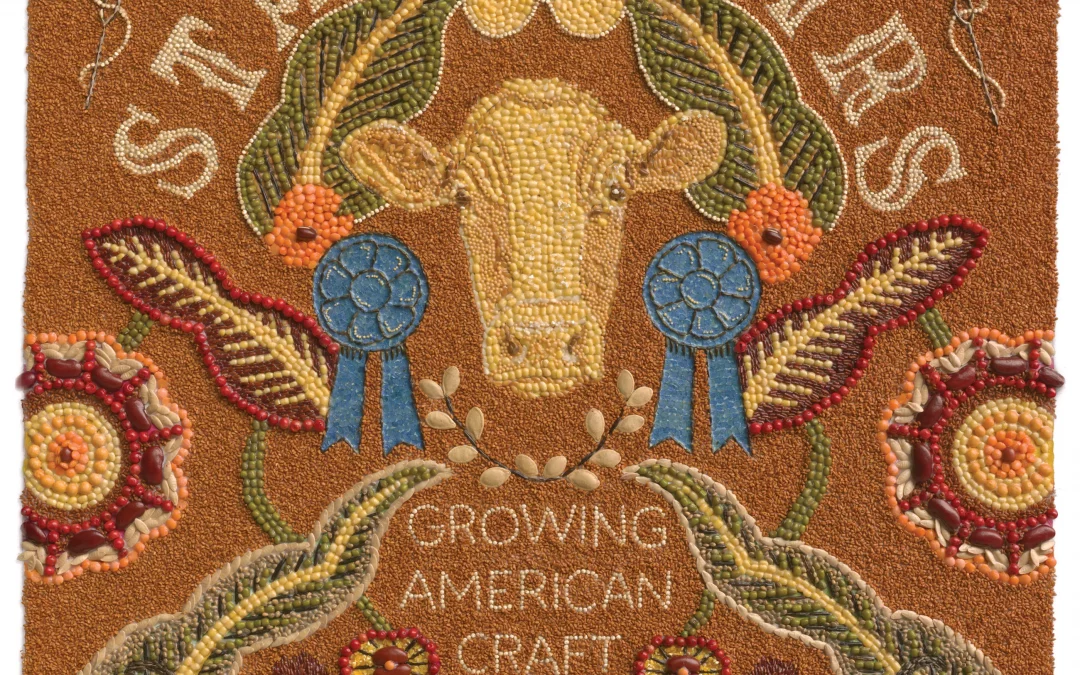
The Smithsonian commissioned Minnesota crop artist Liz Schreiber to make the catalog cover for its upcoming exhibition on state fairs. (Courtesy of Liz Schreiber)
…
Minnesota crop artists are highlighted. But some say the butter-sculptor pick was greased!
The free exhibit, which opens on Aug. 22 and runs through Sept. 7, 2026, will represent the first significant exploration of how American state fairs have cultivated an abundance of arts and crafts
.
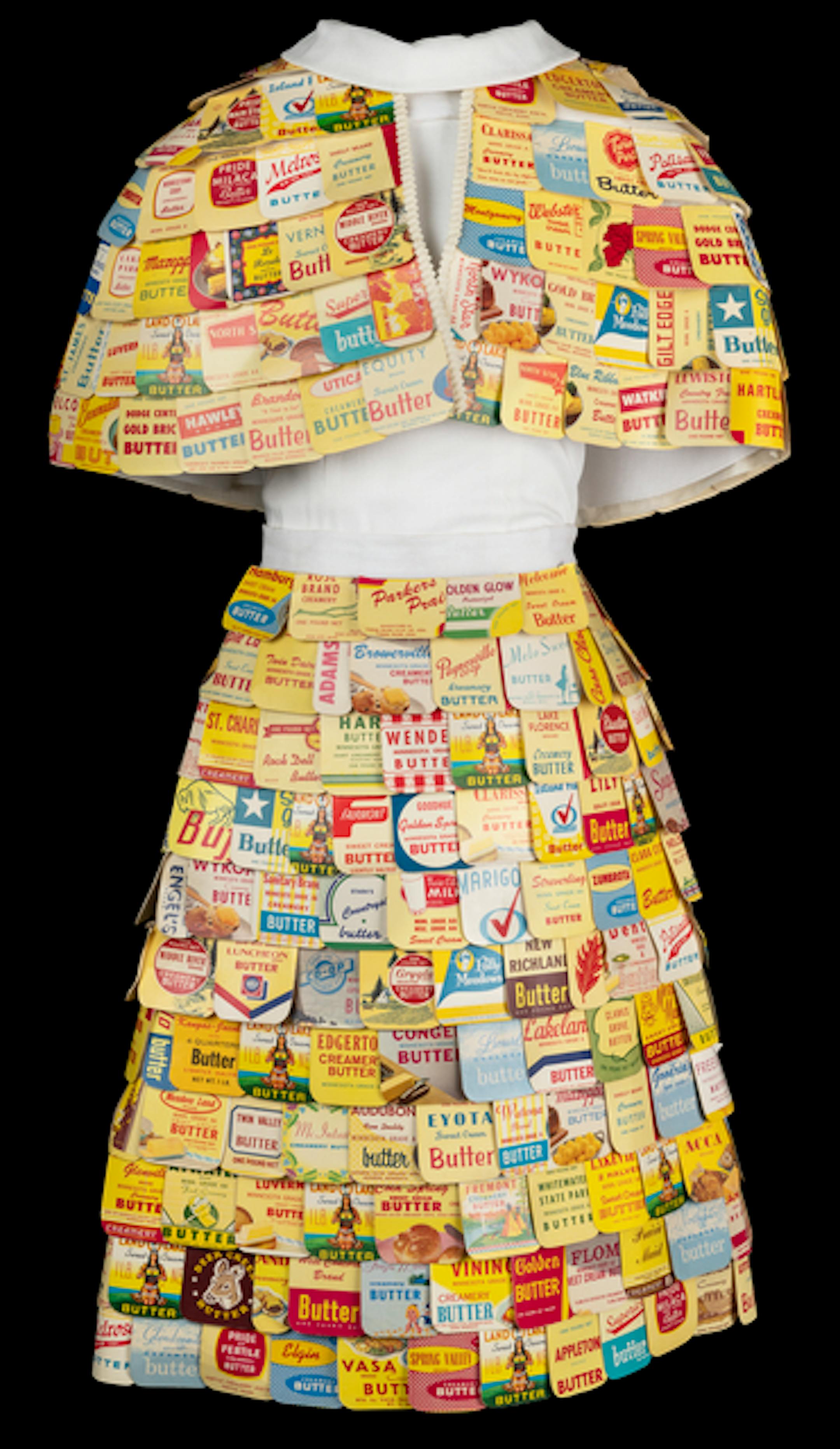
The exhibit’s Mankato-raised craft curator Mary Savig picked some of the crème de la crème — and the crop de la crop — of Minnesota State Fair artists for inclusion. Among the highlighted works are a pointillist-esque portrait of President Richard Nixon by the late “Seed Queen” Lillian Colton and a butter-carton dress made and worn by the 1965 Princess Kay of the Milky Way.
Savig’s selection of the Iowa State Fair’s head butter sculptor to carve one of her iconic, life-size bovines for the exhibit has churned controversy. “I do hope Minnesotans forgive me and give the butter cow a chance,” Savig said.
…
The butter carton dress worn by Princess Kay of the Milky Way in 1965. (Courtesy of the Minnesota Historical Society)
…
Fair history
Savig created the national exhibition to cast an overdue spotlight on underrecognized artists whose work broadens the picture of American arts and crafts.
“State fairs really have been these amazing platforms for artists to show us their skills and their creative ideas,” she said, noting that they feature many artists who wouldn’t typically show their work at an art gallery or museum. (Minnesota didn’t even have an art museum when it held its first state fair, in 1859, the year after it was granted statehood.)
A lot of early fair crafters came from rural areas, and their skills in handwoven rugs or needlework, among other domestic activities, had been passed down from one generation to the next.
“The fairs were the outlet, especially for women, to be recognized and honored for their work,” Savig said.
…
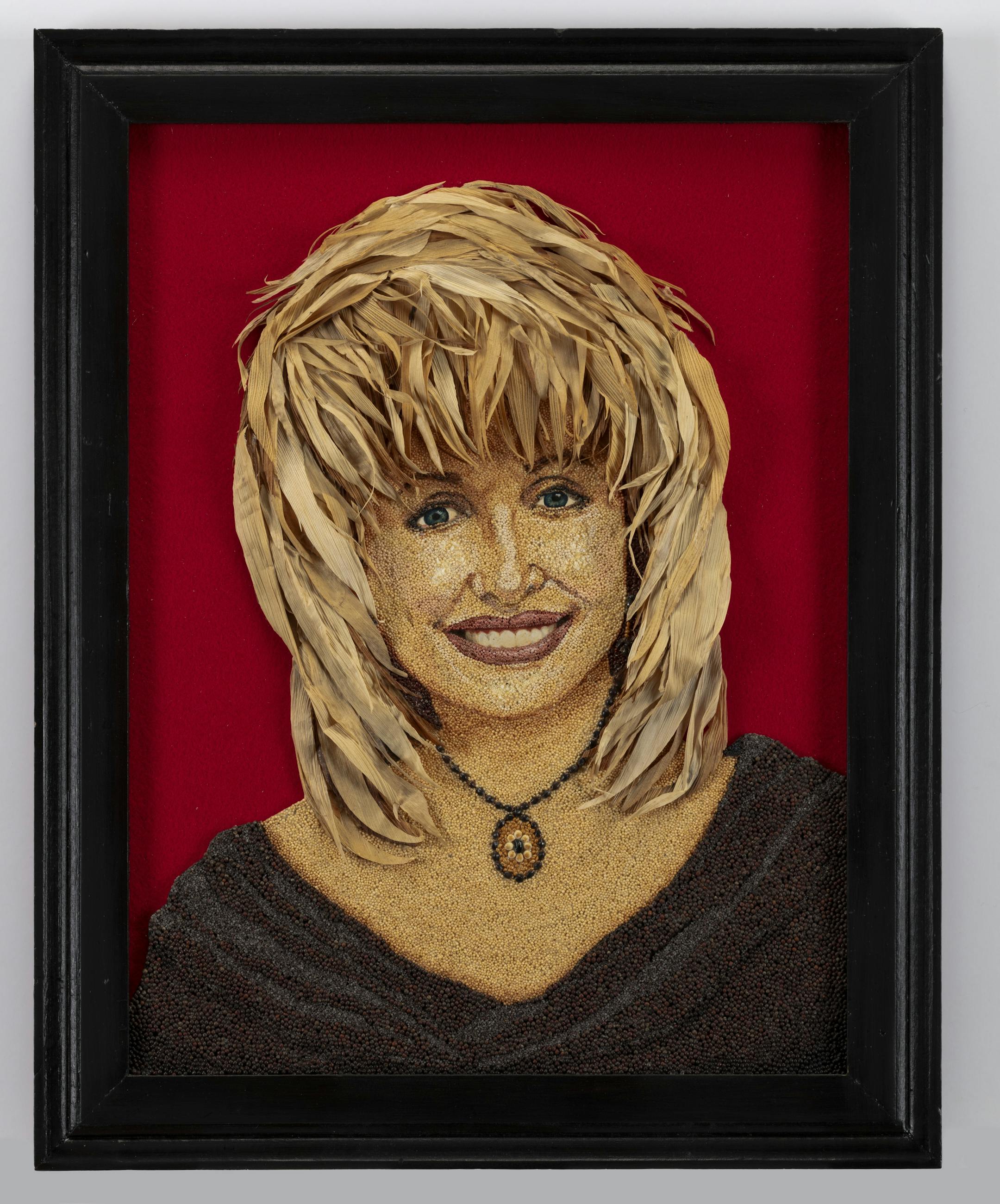
A 2007 portrait of Dolly Parton by Linda Paulsen. (Linda Paulsen and John Colton)
…
Featured artists
“State Fairs: Growing American Craft” includes 240 artworks from the mid-19th century to the present, representing most of the 50 states.
Savig says her home state’s fair lit the spark for the exhibit (her go-to fair foods are Hawaiian shaved ice and lefse). And that fair’s slogan reflected how the national exhibition brings together the country’s range of fair traditions. “In the spirit of the Minnesota State Fair, we keep referring to this project as the Great State Fair Get-Together.”
When Savig attended the 2023 Minnesota State Fair, she was impressed by the commemorative artwork by crop artist Liz Schreiber. So she commissioned Schreiber to create the exhibition’s catalog cover, which will also be reproduced on merchandise.
Savig mentions Colton’s 1969 best of show seed portrait of Nixon as a provocative piece to display following the new president’s defeat of his Minnesotan opponent Hubert H. Humphrey. She says the portrait launched the genre’s penchant for pop-culture subject matter. It will be displayed alongside several other celebrity portraits created by Colton and her daughter, Minnesota crop artist Linda Paulsen.
“Craft has this very relatable feeling to it,” Savig said. “You can feel the artist’s hand and understand that she spent so much time manipulating these tiny seeds with a toothpick to make this for us.”
That handcrafted appeal extends to mediums used by other Minnesotans featured in the exhibit, including a rosemaling painter, textile artist and clothing designer.
Savig hopes that exhibit visitors appreciate the huge diversity of skill and creativity found on the fairgrounds and are perhaps inspired to participate. She, herself, took up knitting a few years ago and hopes to compete. “I’m not good enough to enter into the Minnesota State Fair, but I’m going to try to enter the Arlington County Fair,” Savig said.
…
By Rachel Hutton
Rachel Hutton writes lifestyle and human-interest stories for the Minnesota Star Tribune.
The Sanneh Foundation is also partnering with Black Radish to double its space. Credit: Sheila Regan
…
Artscape: Started by two artists, the Community Supported Agriculture project works with homeowners to create gardens filled with edible crops.
…
…
Artists Carrie Elizabeth Thompson and and Jade Townsend started the Minneapolis urban farming business Black Radish. Credit: Sheila Regan
…
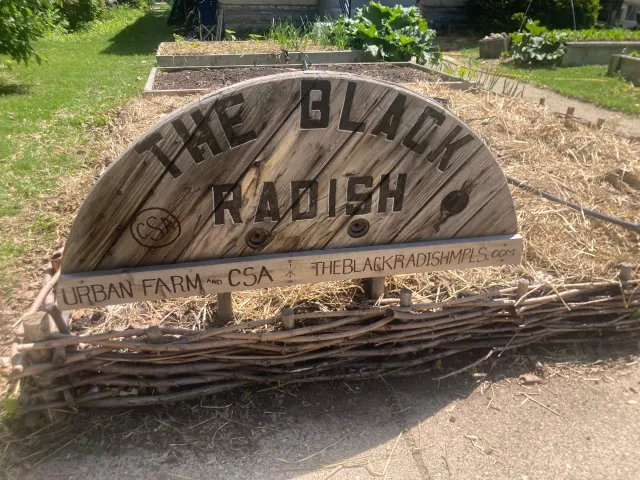
Two Minneapolis artists have taken their visual skills to the soil in the creation of Black Radish, an urban farm and Community Supported Agriculture (CSA) business that doubles as a landscaping firm. Located in the Standish-Ericsson neighborhood in South Minneapolis, Black Radish partners with neighbors to create vibrant gardens full of fresh locally grown foods.
They’re named after the fierce black radish vegetable, with an allusion to the black flag used by pirates, according to co-owner Jade Townsend. “We kind of take over people’s yards and do things a lot differently than a standard farm.”
Townsend is also an artist, with a background in drawing, sculpture and installation. His wife, Carrie Elizabeth Thompson, is a photographer. They met on Tinder about 10 years ago when Townsend was visiting from New York. Since 2018, they’ve been channeling their creative energy into growing things. Their main focus is on edible crops like rhubarb, garlic, tomatillos, komatsuna (Japanese mustard greens), tomatoes, lettuce, root vegetables, herbs and even mushrooms, and they also offer freshly cut flowers like dahlias and zinnias to their CSA members.
They’re both still practicing artists, but fine art has taken somewhat of a backseat to farming. “It’s more on the side, because this is a huge job,” Thompson said. “This is kind of like an art project for us. It’s like community art.”
Townsend sees a lot of overlap between farming and art making as well. “There’s this system of craft involved,” he said. “It’s like art on steroids.”
The couple decided to start an urban farm in part because they were sick of the vapidness of the art world. “We wanted to do something that made a difference in some capacity,” Townsend said.
Black Radish now spans 14 residential yards. In exchange for using a homeowner’s yard, the couple creates an aesthetically pleasing landscape featuring both produce and flowers such as marigolds and sunflowers. “Since it’s people’s yards, we try to make it look good,” Thompson said. “The idea isn’t just to grow food— it’s to create something beautiful.”
…
For some of the participating yards, Black Radish uses raised beds, while others have gardens planted directly in the ground. Black Radish also employs trellises for peas, cucumbers, beans and melons to climb over the course of the summer, creating lovely walkways in the yards.
CSA member Tiffany Enríquez, who lives a few blocks away from Thompson and Townsend and owns a second property in the neighborhood, is one of the neighbors on whose yard Black Radish operates.
…
…
For three years, Enríquez had done her own gardening before realizing it was a full-time job. She discovered Black Radish after participating in a community art project with the City of Lakes Community Land Trust. Enríquez had become a homeowner through the Land Trust, and through the organization participated in “This House is Not for Sale,” in collaboration with artists and poets.
“Basically they worked with homeowners who had bought foreclosed properties to sort of process that grief and what that means for a homeowner to move into a foreclosed home,” she said. She was partnered with artist Witt Siosoco and also met Townsend through the project.
Enríquez is delighted to have Black Radish create a garden on her property. “This is such a win for me,” she said.
Each week, the couple open up their backyard for the CSA pick-up for their members. It’s kind of like an art opening, Townsend said. They invite all 50 members to pick up the week’s harvest, and use Townsend’s whimsical chalkboard menu displays with drawings to organize the different items.
“It’s very much thought out in the same way you would have an exhibition or a show,” Townsend said. “You want them to have a certain experience.”
The project has also been one of community connection. “We introduce people and share recipes and different gardening techniques,” Townsend said.
Besides their regular members, Black Radish has also partnered with the Sanneh Foundation, through a grant from the Minneapolis Homegrown project. “We partner with them to purchase some of their CSAs, and we distribute those at our food distributions at Corcoran Park,” said Joe Walker, director of nutritional services with the Sanneh Foundation.
“Black Radish was a wonderful way for us to work with someone from the community and supply to the community, which is something we’re always trying to focus on,” he said. “It’s a really great way to be prescriptive about what our participants want in our food distributions, as well as bringing healthy, nutritious and locally grown produce. It’s just really been a win-win, and they’ve been fantastic. They’ve knocked it out of the park every year.”
The Sanneh Foundation is also partnering with Black Radish to double its land space. The foundation is acting as Black Radish’s fiscal sponsor for an online fundraising campaign, with the funds going toward what Black Radish needs for a down payment on 12,000 square feet of empty land in the neighborhood.
Black Radish is initially raising $65,000 for the down payment, with a long-term goal of $250,000 to purchase the land. For now, they’re holding off on becoming a nonprofit because, if they end up needing to apply for a USDA loan, they must do so under their current status as an LLC rather than a 501(c)(3). “We have a board, we have the paperwork in order, but we’re waiting until we secure the land,” Thompson said.
The new site could triple Black Radish’s production, because the new land is all in one location. Their current model that spans different yards requires workers to travel between locations, each with different shade levels and water systems. “Each yard has a different microclimate personality,” Thompson said. With the new land, they could reserve neighborhood yards for low-maintenance crops and dedicate the larger plot to plants requiring daily care.
Already, Black Radish has raised almost a third of the initial goal. The couple’s hope is to bring their artist-driven community farming project to the next level, blending artistic skill with agricultural know-how.
The Blueberry Art Festival features over 240 art & craft vendors, food vendors, beer garden, & pie!
…
We are excited to announce the 45th annual Blueberry Art Festival. The event draws 30,000 to 40,000 festival-goers annually across the three-day event. The festival features 237 booths filled with artists and crafters, 25 food vendors, a beer garden, and freshly baked blueberry pies.
…
…
We have many returning artists, crafters, makers, and exciting new ones. You will find it at this year’s festival if you are looking for watercolor or acrylic art, pottery, woodcraft, or something unique or unusual. We mentioned food. Those sumptuous blueberry pies and delicious burgers, brats, and pork chops are back on a stick. Of course, there is seafood, kettle corn, and refreshing beverages – did we mention waffles too?
Since there is too much to do in one day, why not enjoy Operation Blueberry, visit our local attractions one day, and return to the festival for the second day of fun, food, and exciting arts and crafts?