Global: Shopping for clothes is about to get weird…

Global: Shopping for clothes is about to get weird…

The Hermès store in China that took £2.1m in one day after reopening. Photograph: Alex Plavevski/EP

___

…here’s how to make it simpler.  With shops due to reopen, customers can expect a very different experience. Do your research online first, buy before you try – and avoid jeans.


Picture the scene: you walk into your favourite clothes store for the first time in three months, check your mask is covering your nose and mouth, and pump sanitiser into your hands. And then you spot it – the perfect gingham dress. Just the mood-boosting, picnic-appropriate fillip your wardrobe needs, and it is just there, on the other side of the shop floor. But, instead of making a beeline for it, you have to take the long way round, following the one-way system marked out in arrow stickers on the floor, pausing when the shopper in front of you does in order to observe the two-metre-rule (the pandemic-era grandmother’s footsteps that we have grown used to in the supermarket aisles). And then – disaster – the masked shopper in front of you reaches for your gingham dress and takes the last one in your size. Which means that, if she doesn’t buy it, it will be headed for quarantine in the stock room, rather than back to the shop floor.

But reports from post-lockdown all over the world suggest that there is likely to be an appetite for a post-quarantine clothes splurge. A Hermès boutique in Guangzhou took the equivalent of £2.1m on its first Saturday after reopening, setting a record for a single day in a single boutique in China’s retail history. Wherever Zara stores have opened their doors from Paris to Tunis, shoppers have formed long first-day queues.

Tommy Hilfiger shop reopening in Azerbaijan.
Pinterest  Tommy Hilfiger shop reopening in Azerbaijan. Photograph: Aziz Karimov/Getty Images
___

With warehouses of unsold summer stock to shift, retailers are at pains to do everything they can to make customers feel safe. Some of the basics will be universal. In-store numbers will be strictly limited, so expect queues outside. Stores with more than one door may operate separate entrances and exits to avoid face-to-face contact at these points. Masks will be worn by staff, and shoppers will be encouraged to follow suit. Contactless payment will be encouraged (expect a push on Apple Pay and other mobile payment services, which are not usually subject to the £45 limit) and sanitiser pumps stationed by each cash desk. Only household members can shop together, and lift occupancy will be limited to one person or those from one household.

Lots of things will vary between stores, however. In the first wave, many will open only those branches whose customer base can travel by foot, bike or car. John Lewis will keep changing rooms closed for now, but Reiss and Gap will open some, with rigorous sanitising between customers.

Jewellery and watches will be particularly challenging to try on, as the virus can live on metal for much longer than on fabric. Most stores have extended their returns policy to encourage shoppers to try clothes on at home; John Lewis is considering installing “drop boxes” at store entry points, so that returns need not add to in-store footfall. Some shops will open for shorter hours so that staff don’t need to travel at rush hour, others will open for longer to spread out footfall. Selfridges is considering reducing the amount of stock on the shop floor so that shoppers can give each other more space. Harrods will open an outlet at the west London Westfield shopping centre in July where the traditional tightly packed sales rails can have more room. Most stores will keep cafes closed, but 49 Marks & Spencer stores will sell takeout coffees. Some stores will have toilets open – but as one PR told me off the record, those that will aren’t keen to broadcast the fact and become de facto public toilets while few alternatives are available.

Even the greatest cheerleader for the embattled retail industry would struggle to frame this as an enticing day out. Vigilance over meticulous hygiene may reassure customers that they are safe, but that is not the same as making them feel relaxed, happy and in the mood to spend. After all, until three months ago, bricks-and-mortar retail relied on delivering a fun experience to tempt shoppers offline – and “sterile” was one of the most damning verdicts you could deliver.

Expect queues … waiting to get into a reopened clothes shop in Switzerland.
Pinterest
Expect queues … waiting to get into a reopened clothes shop in Switzerland. Photograph: Laurent Gilliéron/EPA
___

“You need a plan,” says Helen Seamons, the Guardian’s menswear fashion editor and a gold-standard shopper, when I ask for her tips for a successful physically distanced shopping trip. “The age of the aimless browse is over for now. And the etiquette of flicking through rails seems doubtful. So do an online recce and save screenshots to your phone of pieces you like. That way you can ask staff where they are, and reduce your wandering-about time.” Some small neighbourhood boutiques that will have capacity for only one or two shoppers at a time plan to offer short bookable appointments rather than having customers lined up outside.

A shop in Moscow preparing to reopen.
Pinterest  A shop in Moscow preparing to reopen.
Photograph: Mikhail Tereshchenko/TASS
___

Alternatively, this could be the time to pivot to online clothes shopping. The best place to start is with a brand you already wear, so that you have a good sense of what size you take and a realistic expectation of what the fabric and finish will be, these being tricky to assess online. Melanie Wilkinson, the Guardian’s styling editor, suggests: “This probably isn’t the best time to buy a new pair of jeans – historically, the one item that requires hours of trying on. Continue to embrace the smart jogging-bottom trend of lockdown instead. You can wear these with silk blouses and relaxed shirts, which are easier to shop for online.” Order several pieces at once and expect to send most of them back – if you only order one item, you might be tempted to convince yourself you like it to save the bother of returning it. But whether you are shopping in store or online, you won’t be taking anyone with you into a changing room for a while.

To recreate shopping with friends, consider setting up a WhatsApp group for honest advice so that each of you can try on new purchases in front of the mirror and send selfies for feedback. (Consider carefully who you want to include in this group. Does their taste match with yours? How much brutal honesty is too much? Will it annoy you if they copy what you buy?)

Things will get better. Swifter sanitising systems, some using ozone-based technology and others ultraviolet light, are being worked on, with a view to reducing the quarantine time for clothes that customers have been handled to an hour or less. Zara already has an online fit tool that uses your height, weight and body shape to recommend which size you buy – so far, this has always worked out for me, although the hit rate is inconsistent between different body shapes and sizes. Amazon is developing an app that will “data mine” photos from your phone to create a bespoke virtual mannequin that accurately represents your body shape, which can then “try on” clothes. The new normal is a strange place. Anyone for retail therapy?

___

Americans have had enough …

… and are marching for justice in unprecedented numbers. In small towns and big cities across the country, thousands of people are giving voice to the grief and anger that generations of black Americans have suffered at the hands of the criminal justice system. Young and old, black and white, family and friends have joined together to say: enough.

The unconscionable examples of racism over the last weeks and months come as America’s communities of color have been hit hardest by the coronavirus and catastrophic job losses. This is a perfect storm hitting black Americans. Meanwhile, the political leadership suggests that “when the looting starts, the shooting starts”. The president who promised to end the “American carnage” is in danger of making it worse.

At a time like this, an independent news organisation that fights for truth and holds power to account is not just optional. It is essential. Because we believe every one of us deserves equal access to fact-based news and analysis, we’ve decided to keep Guardian journalism free for all readers, regardless of where they live or what they can afford to pay. This is made possible thanks to the support we receive from readers across America in all 50 states.
theguardian.com


Summer Guide 2020: Rebuilding, Education, Nourishment, Lifting Up

Summer Guide 2020: Rebuilding, Education, Nourishment, Lifting Up

Citypages: We’ve joked in the past that summer is canceled. But in reality, this could be the most important summer of our lives. Things in the Twin Cities already looked vastly different in the throes of COVID-19. But after the police killing of George Floyd and the following protests and riots, the next few months are crucial. With that in mind, this year’s summer guide is focused on rebuilding, education, nourishment, and lifting up Black organizations.


Ready to rebuild? These groups and businesses could use your help

Black-owned/run arts orgs in the Twin Cities to support right now (and always)

Black-owned restaurants in the Twin Cities to support right now (and always)

GoFundThem: Where to donate to save Twin Cities restaurants

Farmers markets

Classes and workshops

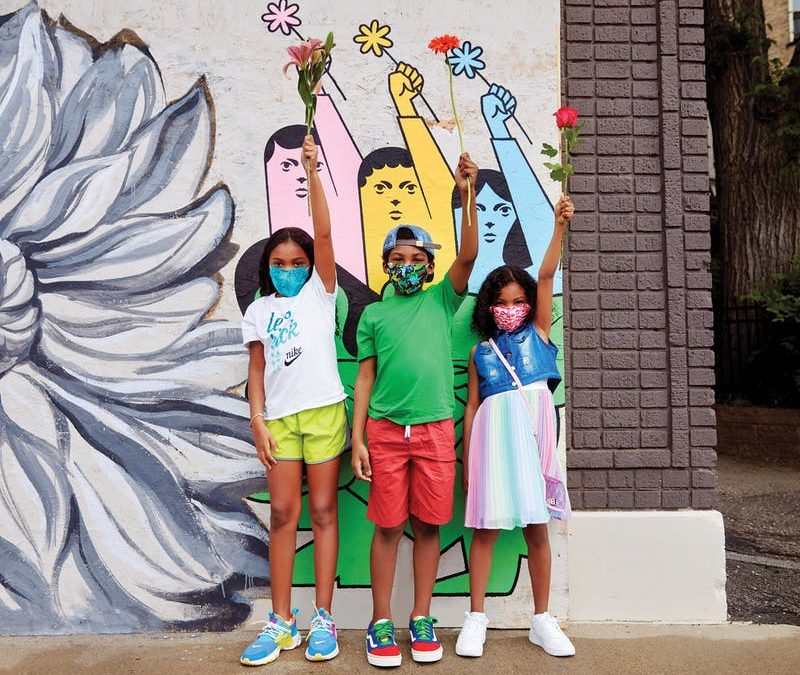
Photos by Hammed Akindele @flytouchstudio

Colorful figure mural by Jose Dominguez @hozay_dmngz

Butterfly mural by Andres Guzman

Special thanks to our models:

Jasir Sadeen
Taliyah Letexier
Alexianna Cherry
J. Morgan


citypages

How hair became a culture war in quarantine

How hair became a culture war in quarantine

What the 1968 feminist protest against Miss America and quarantine-breaking haircuts have in common.

A man covered in a drape patterned like the American flag sits in a barbershop getting his hair cut by a barber.
A man gets his hair in Temecula, California, in late May 2020.
Francine Orr/Los Angeles Times via Getty Images


Now, in 2020, Americans have once again mythologized traversing a great distance — this time for haircuts.

In Yuba and Sutter counties in California, salons and barbershops have opened ahead of the state’s schedule and, according to the Los Angeles Times, some antsy people are traveling up to 600 miles for a cut. The day-long journeys to snip away stray follicles are drastic repercussions of salon shutdowns across the country.

Hair has been a roiling topic of conversation since coronavirus lockdowns first went into place across the country. With access to salons and barbershops cut off, Americans have been forced to face and change their habits: buying clippers, dyeing colors, taking to social media to debate how long it takes roots to grow or show off their failed attempts at a bangs trim. Even celebrities have confessed their follicular secrets. And as the shutdowns have gone on, people have become increasingly restless and desperate.

In Michigan, anti-lockdown protesters staged haircut demonstrations outside the Capitol in Lansing, defying the state’s stay-at-home orders and toting “End Tyranny” signs. Similar protests from stylists and cosmetologists have happened in Texas and Connecticut.

Barbers cut hair during the Michigan Conservative Coalition-organized “Operation Haircut.”
Jeff Kowalsky/AFP via Getty Images


These moments of haircut valor come despite health officials’ warnings about a second wave of coronavirus infections and how salons and barbershops are particularly susceptible to virus spread because of the close nature of grooming. Despite this danger, as states begin to open up, salons and barbershops are being included in fairly early phases of reopening, often before hotels or schools.

And so salons and barbers have become the battlefield of a great American culture war.

As superficial as it seems, hair is one of the greatest expressions of our identity

There is an $87.9 billion global industry centered on what’s going on, or not going on, at the top of our heads. Haircuts, shampoos, conditioners, coloring, texture treatments, hairdryers, pomades, oils, sunscreens, scalp scrubbers, and everything else that allows us to do what we want to do with our hair is big business, with deep cultural significance. It’s also intrinsically personal.

The heart of the hair industry, and the beauty industry at large, is wrapped around this core idea of self-expression. As superficial as it may seem, how we cut, color, treat, and process our hair is how we want to see ourselves and, at the same time, how we want to be seen. Hair brings us closer to our idea of our ideal selves, whatever that may be.

“It is part of a routine that we follow — a routine we’ve been following since we were little kids,” J. Clark Walker, a stylist at Martial Vivot Salon Pour Hommes in New York City, told me. “How you feel about your hair 100 percent affects how we see ourselves. Image takes a lot of upkeep.”

“If you didn’t appreciate your hair, then you definitely do now.” Davide Marinelli, the owner of the Davide Hair Studio in New York City, told me, echoing Walker’s sentiment. Marinelli said that before the pandemic, he was doing 10 to 20 services per day. Hair “makes a huge impact on your everyday life and appearance and self-esteem.”

“HOW YOU FEEL ABOUT YOUR HAIR 100 PERCENT AFFECTS HOW WE SEE OURSELVES”

The way we perceive other people’s haircuts and styles is a language of its own, too. Based on our individual experiences, someone with a shock of pink in their hair sets off our own ideas about what that person is like, who they are, and what their interests are. The same goes for long hair, short hair, a bob, a high and tight, a shaved head, and whatnot.

Hair is an extension of our identity and affords some of us benefits that we may not even be aware of.

I’ve never had to think twice about what my hair looks like, other than I want it to look nice. Nice is completely subjective, of course, and usually involves something I saw on a handsome man in an advertisement or my dreaded Instagram Explore page. But other people, including women and particularly black men and women, don’t have this privilege. The choices they make directly affect how society perceives them and bring up a fraught history about how certain appearances were acceptable and others were not.

In 1968, (largely white) feminists protested the Miss America pageant, and hair tools were among the items symbolically destroyed. That protest is often referred to as the one where bras were burned, but in actuality, no bras were incinerated — they were just trashed along with curlers and wigs, symbols of the standards placed on women’s appearances. To protesters, not having curled hair and a full face of makeup was a symbol of resistance against the sexism of beauty pageants and the sexist norms of the time.

Black women and men have had to face lifetimes of standards placed upon them by white America about what kind of hair is acceptable and what isn’t — a lot more recently than 1968.

In March, Virginia became just the fourth state in history — after California, New York, and New Jersey — to ban hair discrimination, which unfairly targets black men and women for wearing natural hairstyles.

Earlier this year, a Texas high school senior made the news because his school wouldn’t allow him to walk in graduation unless he cut his dreadlocks. Similarly, in New Jersey in 2019, a white referee forced a black high school wrestler to cut his dreadlocks before a match or forfeit. Also in 2019, Brittany Noble, a former news anchor at Mississippi’s WJTV, said she was discriminated against and eventually fired after she wore her natural hair.

Instances like these make clear that how black men and women choose to wear their hair has direct consequences on the opportunities they have, and that institutions and workplaces have often used hair to control people of color.

For black women, wearing natural hair, as Noble did on air, has been a journey, explained Anthony Dickey, the founder of Hair Rules, a business and salon that are built on the credo of helping women, regardless of ethnicity, find beauty in their natural hair texture.

“Oftentimes, being natural for a black woman meant that she was being ‘militant’ or she was [carrying] the ideas that came out of the first natural hair movement in the ’60s and ’70s,” Dickey told me. Ebony explains this idea of militancy primarily revolves around the Afro, and how it embodied the Black Is Beautiful and Black Power coalitions. As black women advanced in corporate, predominantly white, America, their hairstyles changed too.

“No woman of color was going to trust a Sunday press to 60 percent chance of rain and go into a white corporate environment” in the ’80s, Dickey said.

As Dickey explained, and as documentaries like Chris Rock’s Good Hair explored, black women have dealt with decades of voices telling them what was acceptable and desirable hair. Save for a few supermodels like Naomi Campbell, they never saw themselves in beauty bibles like Vogue or Harper’s Bazaar or Glamour. This journey is interlaced with its own nuances and conversations about identity, pride, community, and experiences that many of us who aren’t black or people of color, and haven’t had to deal with these issues, would have trouble fully understanding. As Dickey points out, events like Virginia’s 2020 anti-hair discrimination law passing signal that the journey is still happening. “If we’re talking about natural hair, yeah, you’re talking about the imbalance of beauty and power in an antiquated, archaic beauty industry,” he tells me.

When people, mainly black men and women, are being discriminated against because of their hair, then how they choose to wear it is revealed to be political. The politics and power of hair become all the more clear when we see the response that new groups have to losing control over their own.

Why someone takes a 700-mile journey to get their hair cut

Hair salons and gyms were among the first things to go when states like California and New York began shelter-in-place directives to curb the coronavirus. The reason was simple: The virus spreads when there’s close contact between humans.

Regardless of politics, getting your hair cut is risky because it requires someone’s face to be so close to your own. You’re both breathing the same air, and, barring the advent of human bubbles or remote control robotic arms, you can’t socially distance from your stylist. Each state has its own reopening structure. In states like New York and California, barbershops and salons are usually scheduled to open in the second phase alongside smaller retail. But there is no designated amount of time that directs local governments to move from one phase to another. For example, depending on infection numbers, New York City may have to wait longer than New York state when moving to phase two of its reopening.

Still, as the New York Times points out, even though Americans were concerned about the spread of the virus, the idea of civil liberties being infringed was something right-wing voters are sympathetic to.

These health directives didn’t stop anyone from cutting their hair at home. But, politics aside, there is a special role stylists, barbers, braiders, and other hair professionals play in our society. At Elle, writer Chloe Hall interviewed black women and explained how difficult and time-consuming it is to do their hair at home instead of going to a salon.

“No matter who you are, everyone gets themselves looking a certain way every day, and there are a few things[such as haircuts] that we have been outsourcing for centuries,” Walker, the stylist from Martial Vivot Salon Pour Hommes, told me. It’s something I’m familiar with myself.

Walker has been my barber since I moved back to the city a little over five years ago. Haircuts with him (a fade, with a little length on top) are something I looked forward to because we’ve become friends. Plus, his cuts made me happy and more confident with my appearance — something I haven’t felt in a long time.

For certain people, however, doing their hair at home wouldn’t have the same symbolism of breaking the rules of quarantine, traveling a great distance to get your haircut, and then posting it on social media. The same goes for stylists who opened their shops against health directives. Getting a haircut when society tells you that you can’t is, in its own way, an act of rebellion.

A Washington state hairstylist gives a defiant trim on May 9.
Jason Redmond/AFP via Getty Images


One’s forbidden haircuts, then, become a way to affirm one’s identity not just to oneself but also to other people. An example: Republican Sen. Ted Cruz getting a haircut last month at a salon owned by someone who was briefly jailed for defying the state’s stay-at-home orders.

Some hair professionals rallied, too. In Texas and Connecticut, stylists said they were protesting because the shutdown has hurt their income. In Connecticut, a decision to push back reopening from May to June 1 rankled salon owners and employees.

“You take away our opportunity to operate based on a part of the industry not being ready,” Jason Bunce, an owner of a Connecticut barbershop, told WTNH on May 19. “That is not how this country works. It’s never worked that way. McDonald’s doesn’t shut down when Burger King runs out of buns.”

Of course, everyone is free to feel however they want about their haircuts. But there are some tragic, non-political consequences and outcomes that can result from these rushed reopenings and interactions.

Last month, two stylists at a Missouri branch of Great Clips tested positive for the coronavirus and were found to have exposed more than 100 customers to the disease. And on May 15, CBS reported that a barber who defied stay-at-home orders in Kingston, New York, had, per Gov. Andrew Cuomo, “infected over a dozen people.”

There’s the other side of the equation too: that while you may be ready to break quarantine, your stylist might not necessarily want to see you just yet. They have their own safety to worry about and precautions to take.

“The feeling that it’s your right to get a haircut whenever you want, and not your privilege, is driving people crazy,” Walker told me. “Speaking for myself, I am lucky, and most of my clients understand the situation and have embraced the idea of the quarantine ‘flow’ like a trophy. Are they dying to get a haircut? I’m sure, but they also get the situation we are all in.”

The quarantine “flow” I’m currently sporting is closer to a mullet and makes me feel like a time-displaced, renegade aerobic instructor. It’s currently crawling, all uneven, down the back of my neck. And I can’t wait to chop it off and make fun of it with Clark, as soon as New York City makes it to phase two in its reopening.

Support Vox’s explanatory journalism

Every day at Vox, we aim to answer your most important questions and provide you, and our audience around the world, with information that has the power to save lives. Our mission has never been more vital than it is in this moment: to empower you through understanding. Vox’s work is reaching more people than ever, but our distinctive brand of explanatory journalism takes resources — particularly during a pandemic and an economic downturn. Your financial contribution will not constitute a donation, but it will enable our staff to continue to offer free articles, videos, and podcasts at the quality and volume that this moment requires. Please consider making a contribution to Vox today.

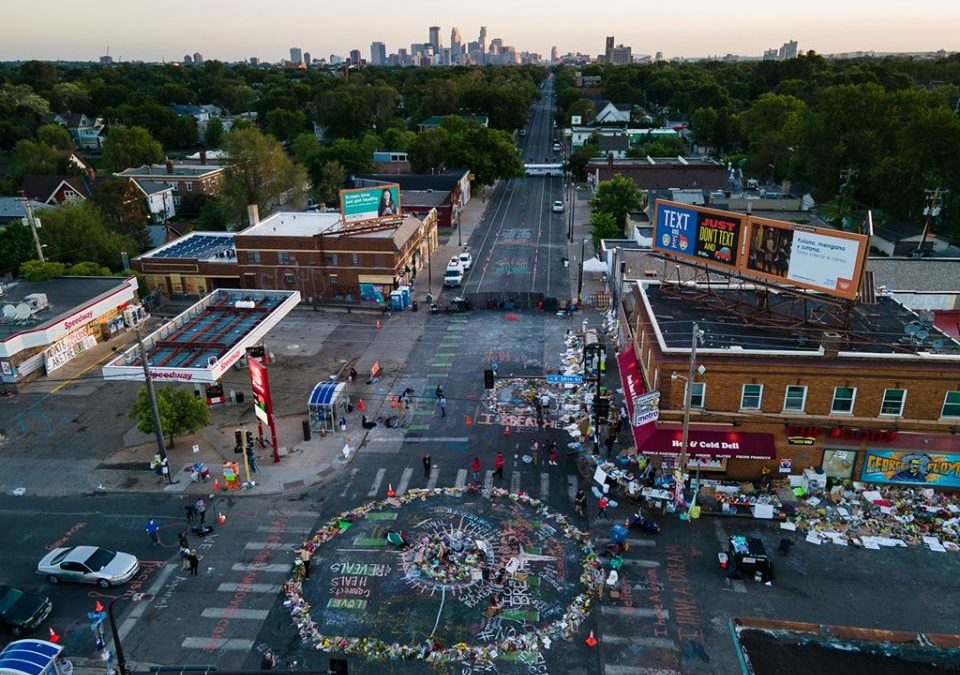
Healing Community: George Floyd

Healing Community: George Floyd

Cup Foods owner on George Floyd: ‘I wish the police were never called’ – TheGrio

Minneapolis has a state policy that requires businesses to call the police when they receive counterfeit money. The day George Floyd allegedly used a fake $20 to purchase cigarettes at Cup Foods was no different.

The only difference is the owner, Mahmoud Abumayyaleh, now says that he wishes that phone call to police was never made.

“We want to share our feelings about what transpired and led to the death of George Floyd. He was murdered and executed in cold blood. Thankfully, it was recorded and there needs to be some accountability of those officers who were involved,” Abumayyaleh told The Grio.

Abumayyaleh, who is known around the community as Mike, says that his family has owned and operated Cup Foods on the corner of 38th and Chicago Avenue for 30 years. It has been the only job he has had.

“We know people by first name. When we opened the community welcomed us. We’ve always enjoyed being here. The people have always had our backs. They respect us and we respect them,” he said.

His father, Hamadeh, started the business in 1989 and was known around the community as ‘pops.’ He passed away but Mike and his brothers along with their kids now run the business.

The convenience store is also a phone shop and meat market, serving halal meat and hot food. The community that surrounds Cup Foods is mixed with Black, white and Hispanic residents who live next door to each other.


THEGRIO.COM

startribune

Photo @adlavinsky


Healing Community: Uptown Association – Minneapolis, MN

Healing Community: Uptown Association – Minneapolis, MN

UPTOWN ART HEALS

So many of our artists are out there adding their expression to all the plywood in place. More to come!!! You can also help with donations at: uptownminneapolis.com/donate/


The Uptown Association’s mission is to improve the economic vitality and sustainability of Uptown through collaboration and partnerships.


UPTOWN ART HEALS

Pin It on Pinterest